
Dartford Fishery · Dartford, Kent · 18th July, 2019
Canadian Pondweed Removal at Dartford Fishery
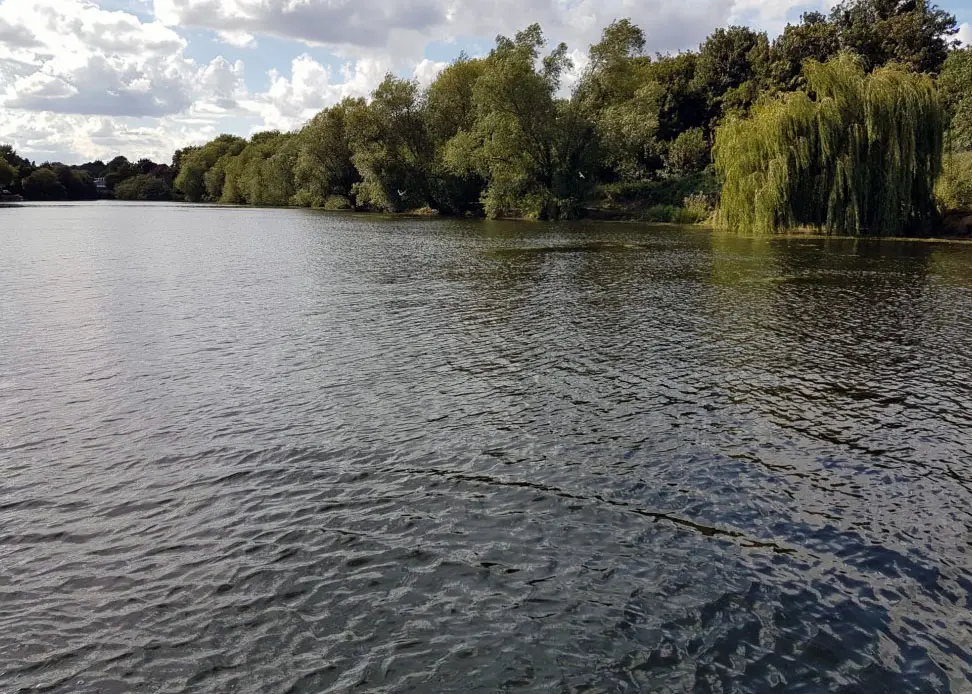
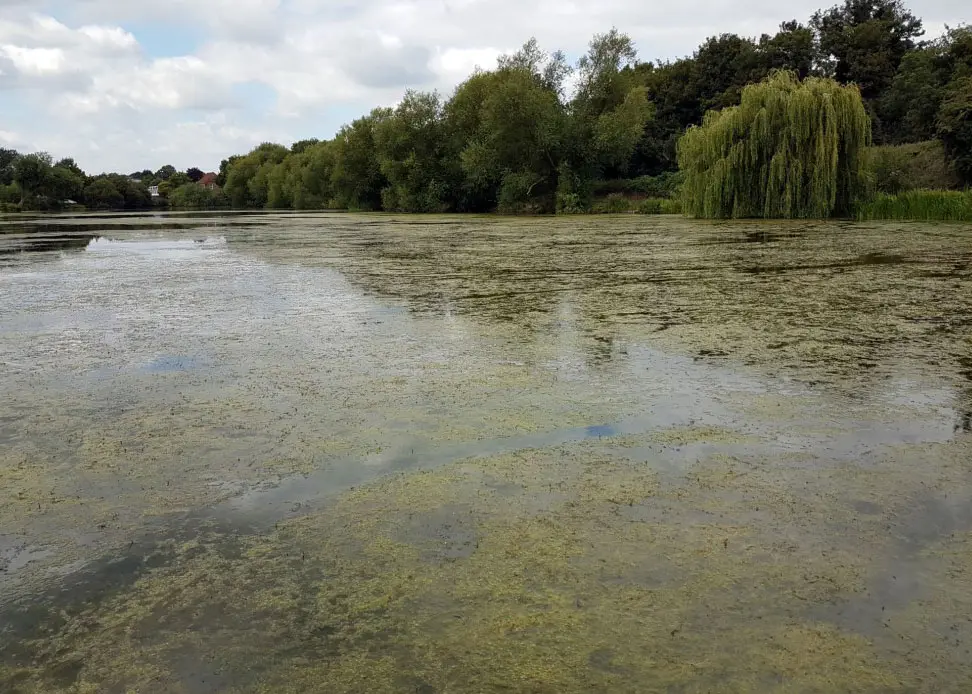
Canadian Pondweed (Elodea) removal at a fishery to clear excessive growth and restore areas of open water.
Canadian Pondweed in UK Waters
Canadian pondweed is a widespread, invasive, non-native aquatic plant in the UK that can form dense submerged growth in ponds, lakes and slow-moving waterways. Where it becomes dominant, thick beds can crowd out other aquatic vegetation, restrict water movement and reduce areas of usable open water. Heavy growth can also interfere with fishing, boating and other recreational activities, while large quantities of dying vegetation can contribute to oxygen depletion as the material decomposes. Once well established, Canadian pondweed can be difficult to manage, as fragments of the plant are capable of producing new growth and spreading to other areas of the waterbody.
Weed Cutting and Removal
Aquaclear carried out large-scale cutting and removal works at the fishery, clearing extensive areas of Canadian pondweed to restore open, fishable water. The works were carefully timed for an appropriate period of the year, taking into account the growth cycle of the weed, fish activity and wider ecological considerations. Once cut, the vegetation was collected and completely removed from the waterbody rather than being left to break down or spread, reducing the amount of organic material returning to the water and limiting loose fragments that could contribute to further growth. Following the clearance, Aquaclear also provided advice on ongoing management and future cutting, helping the fishery develop a practical maintenance programme to keep the weed under control and avoid the waterbody becoming heavily dominated again.
A Real Problem For UK Fisheries
In fisheries, excessive Canadian pondweed can quickly become a serious management problem. Dense growth can make large areas virtually impossible to fish, repeatedly snagging lines, hooks and tackle and restricting access to otherwise productive water. Fish hooked around dense weed are also more likely to become snagged or break the line, potentially leaving them tethered or trailing tackle and increasing the risk of injury or mortality. Heavy weed growth can also contribute to fluctuations in dissolved oxygen, with particularly high risks when large quantities of vegetation die back and decompose. In severe cases, reduced oxygen levels can place fish under significant stress and contribute to fish mortality, making effective weed management important for both the usability and health of a fishery.
Related Projects
Similar Case Studies
Explore other projects where we have delivered similar waterway management work.
Need Similar Work?
Have a Similar Project?
If you're dealing with a similar waterway management problem, contact us to discuss your site and the most appropriate approach.