
Local Council · Pembrokeshire · 12th September, 2026
Algae Removal from Public Waterway
Algae removal from a public waterway to restore open water and improve conditions for wildlife and aquatic habitats.
Managing Algae in a Public Pond
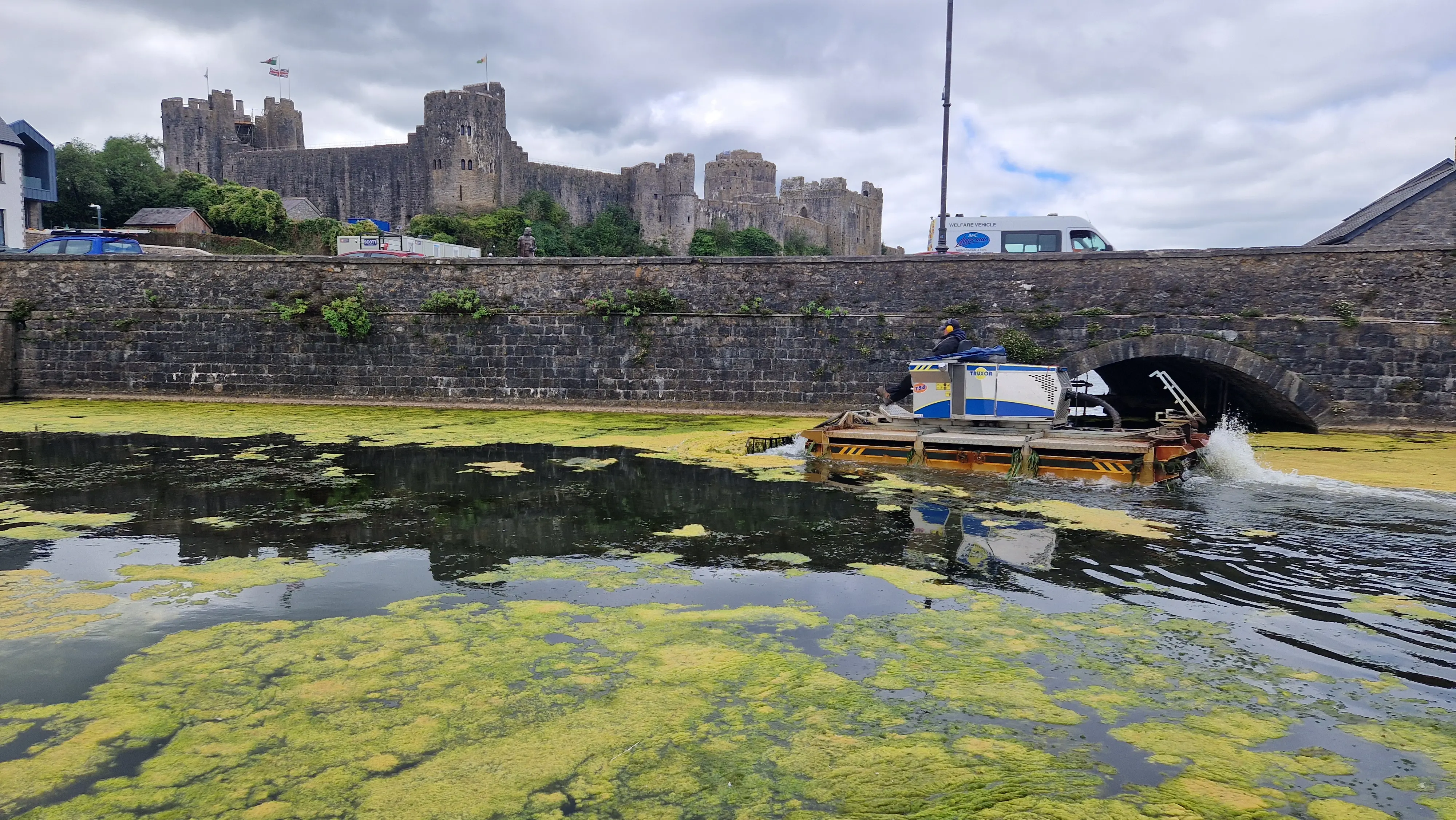
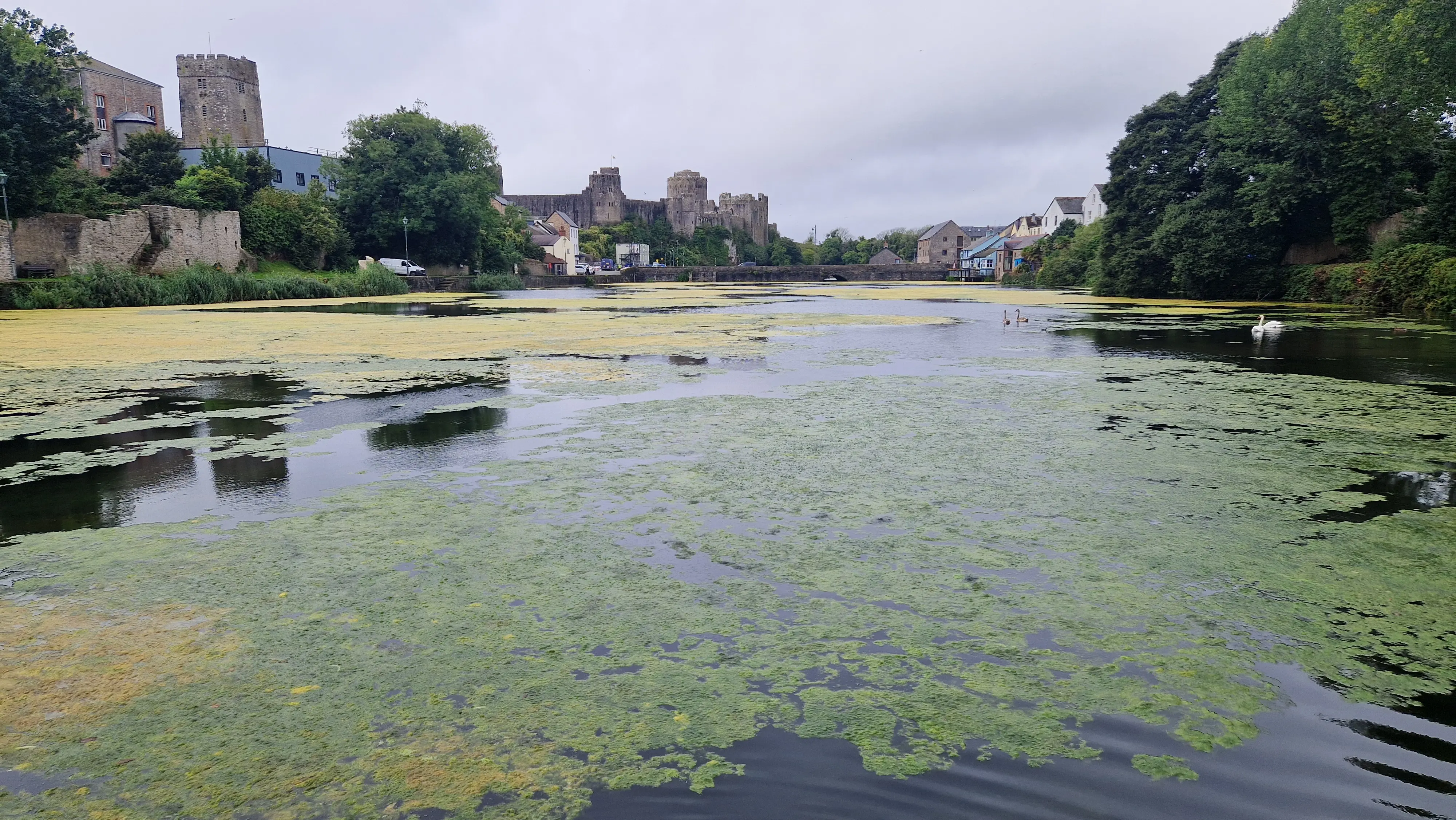
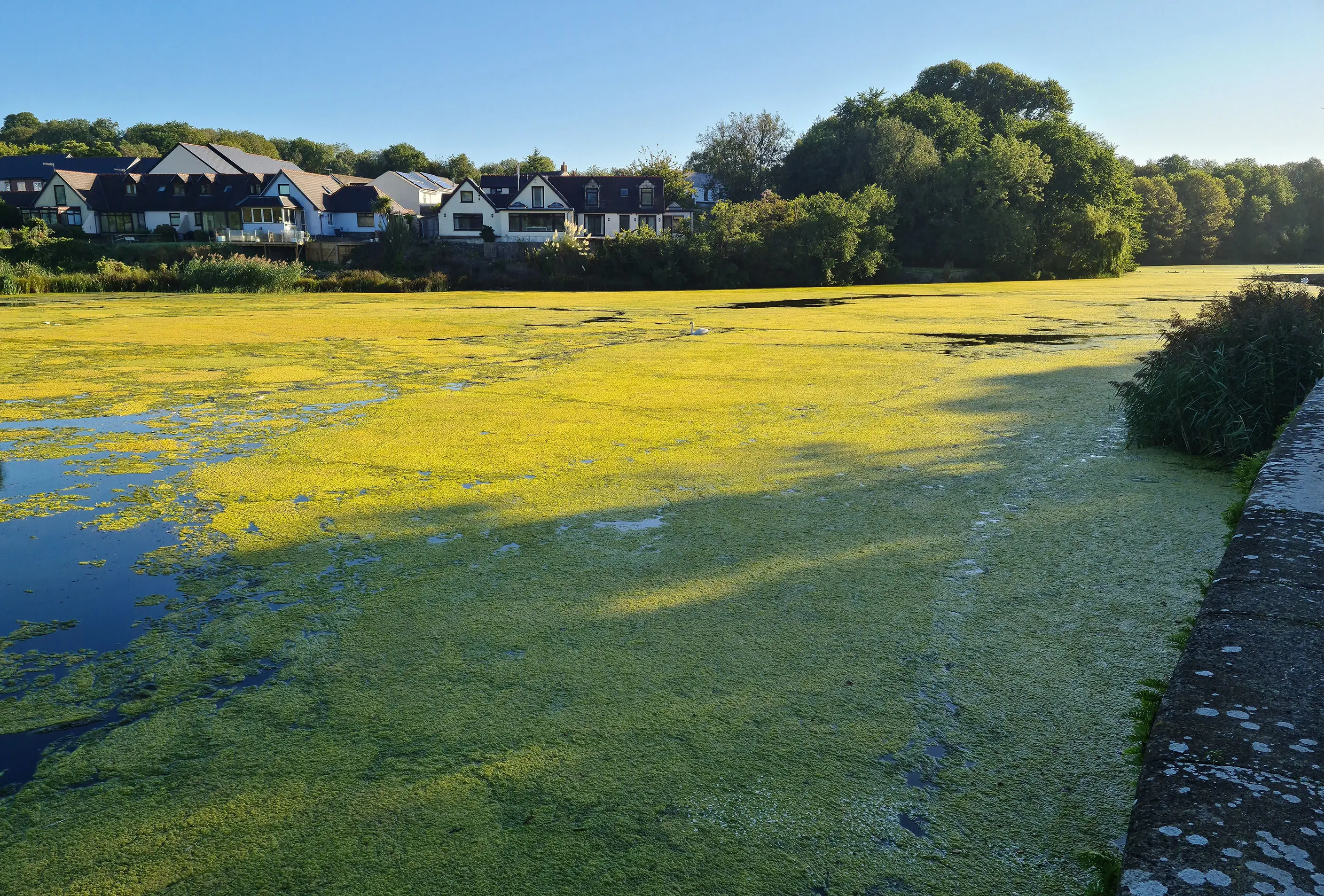
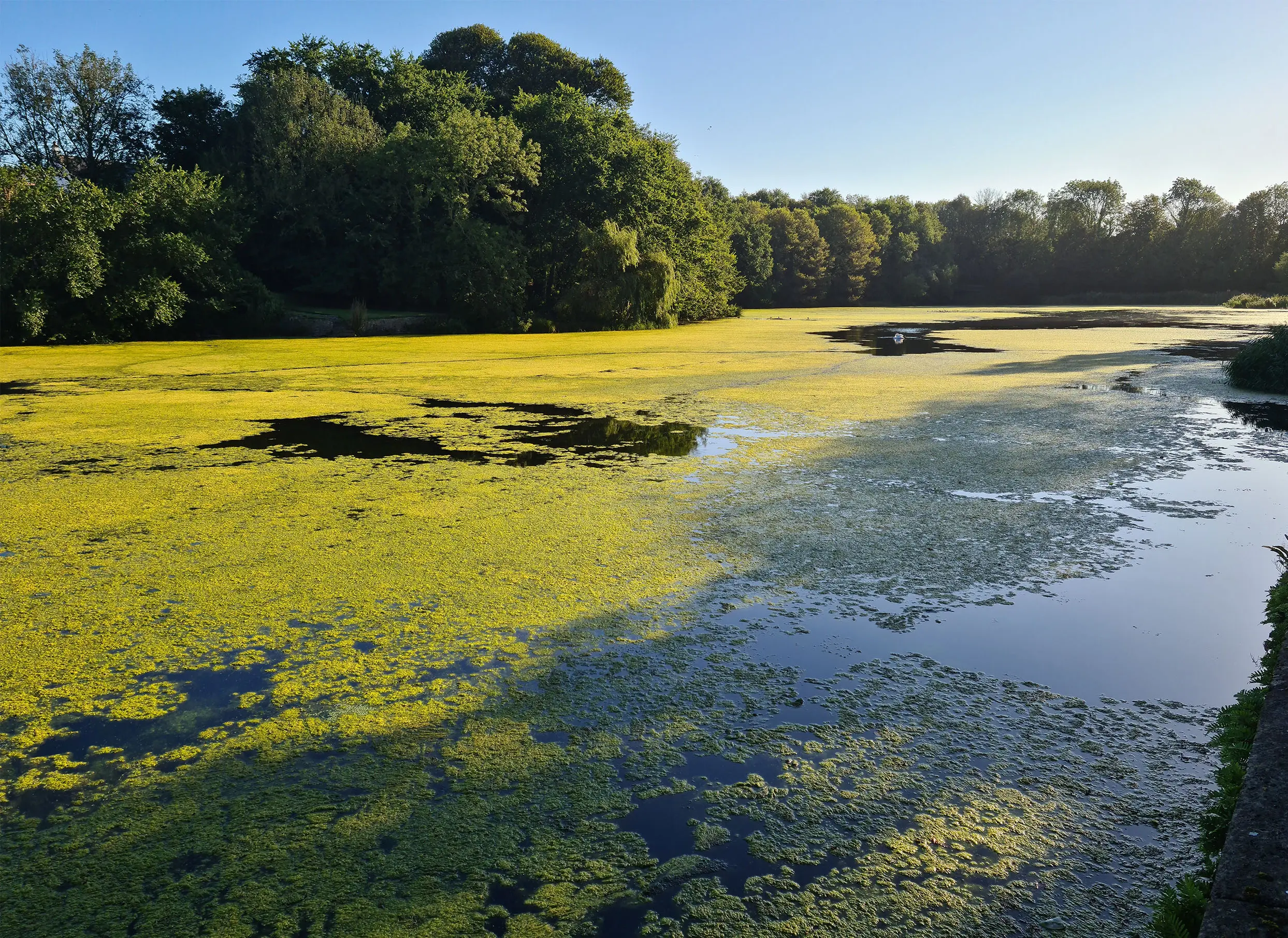
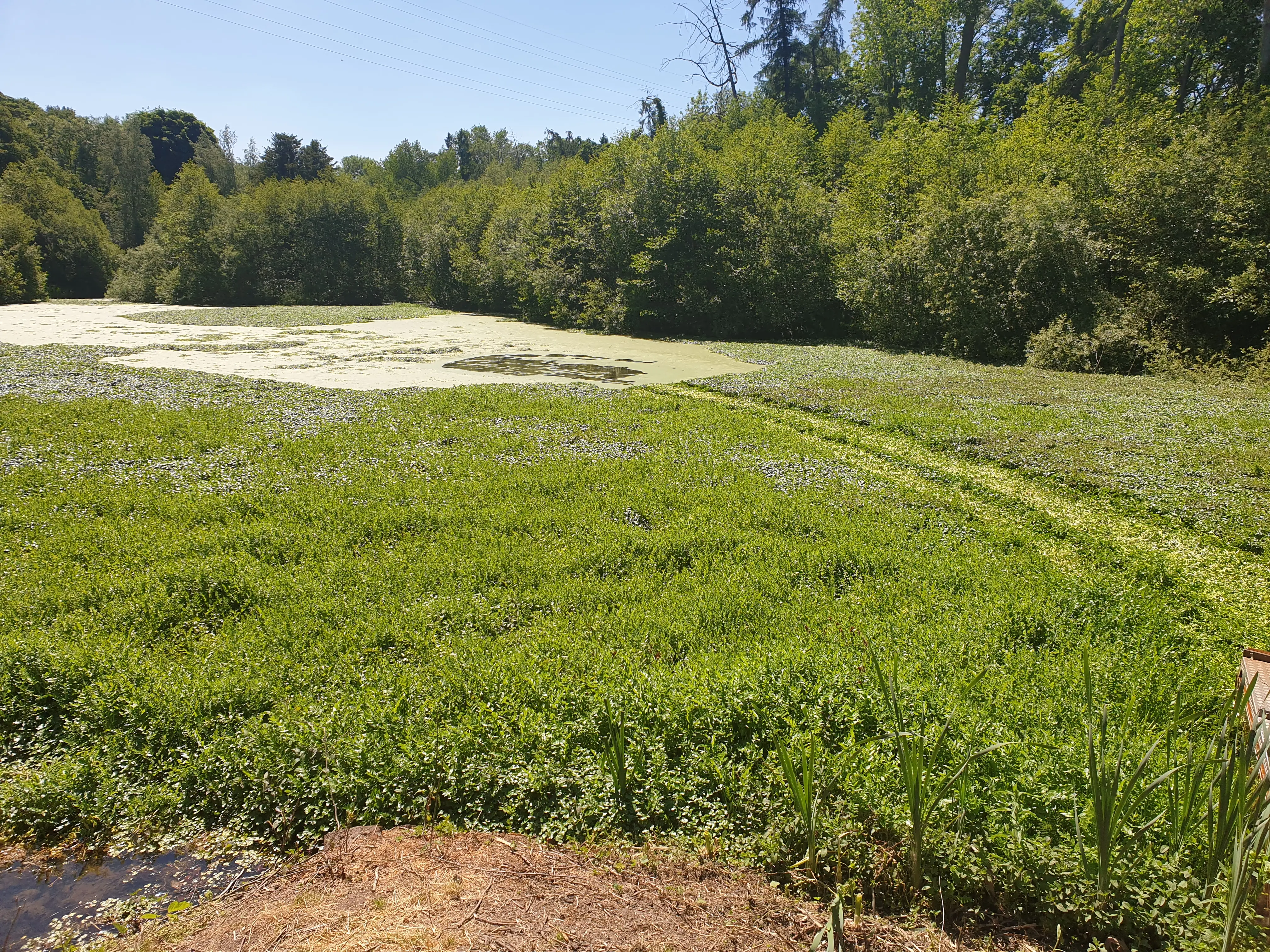
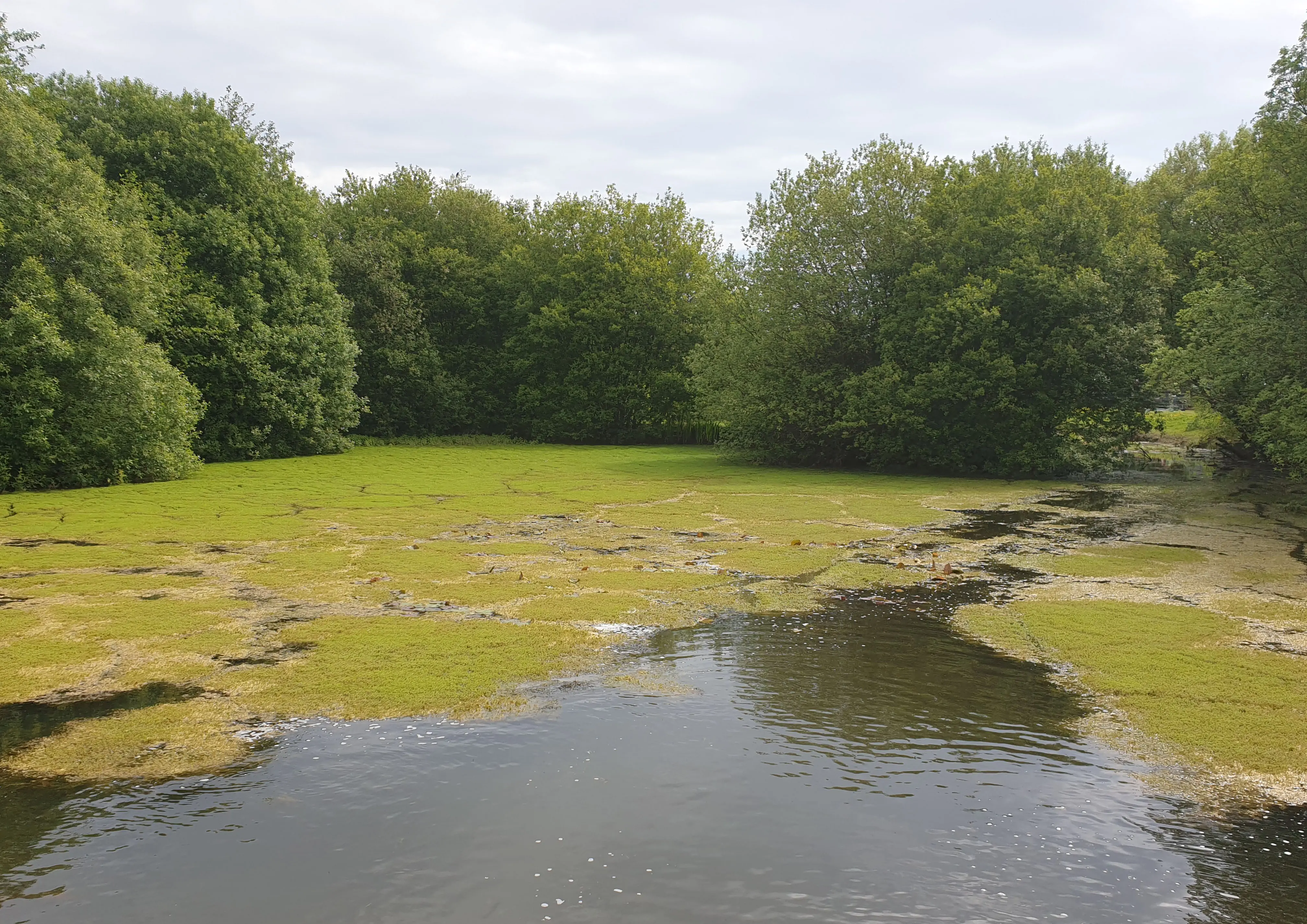
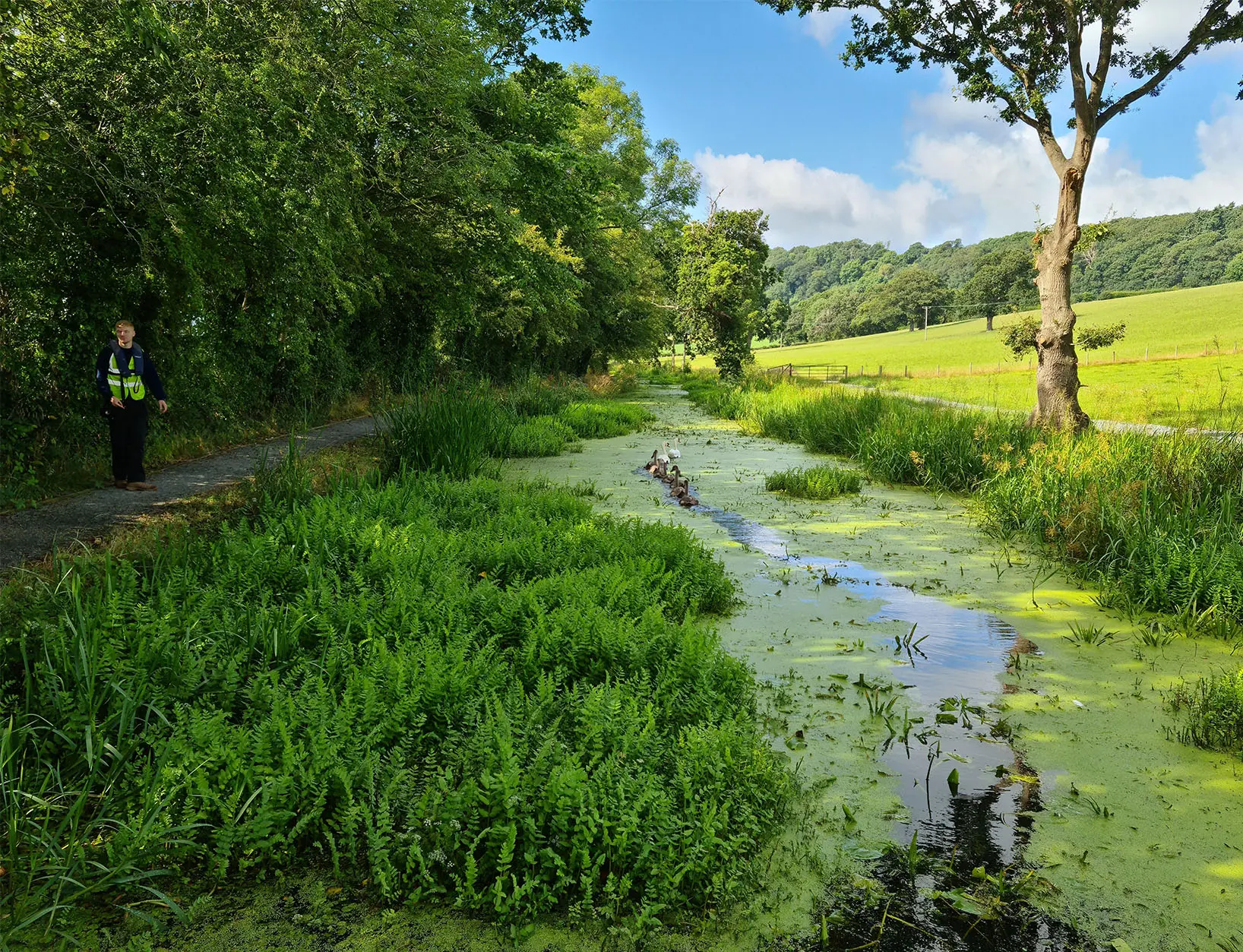
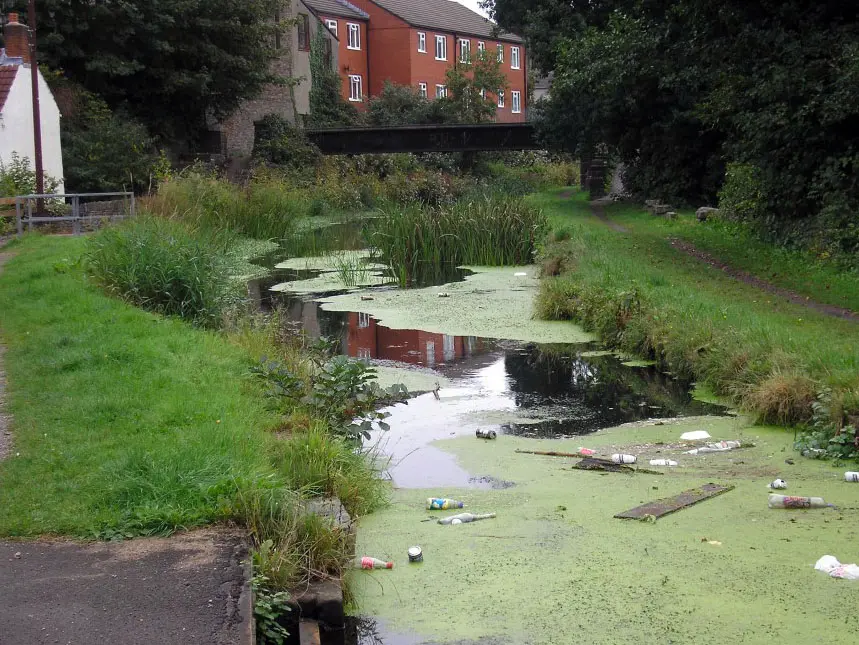
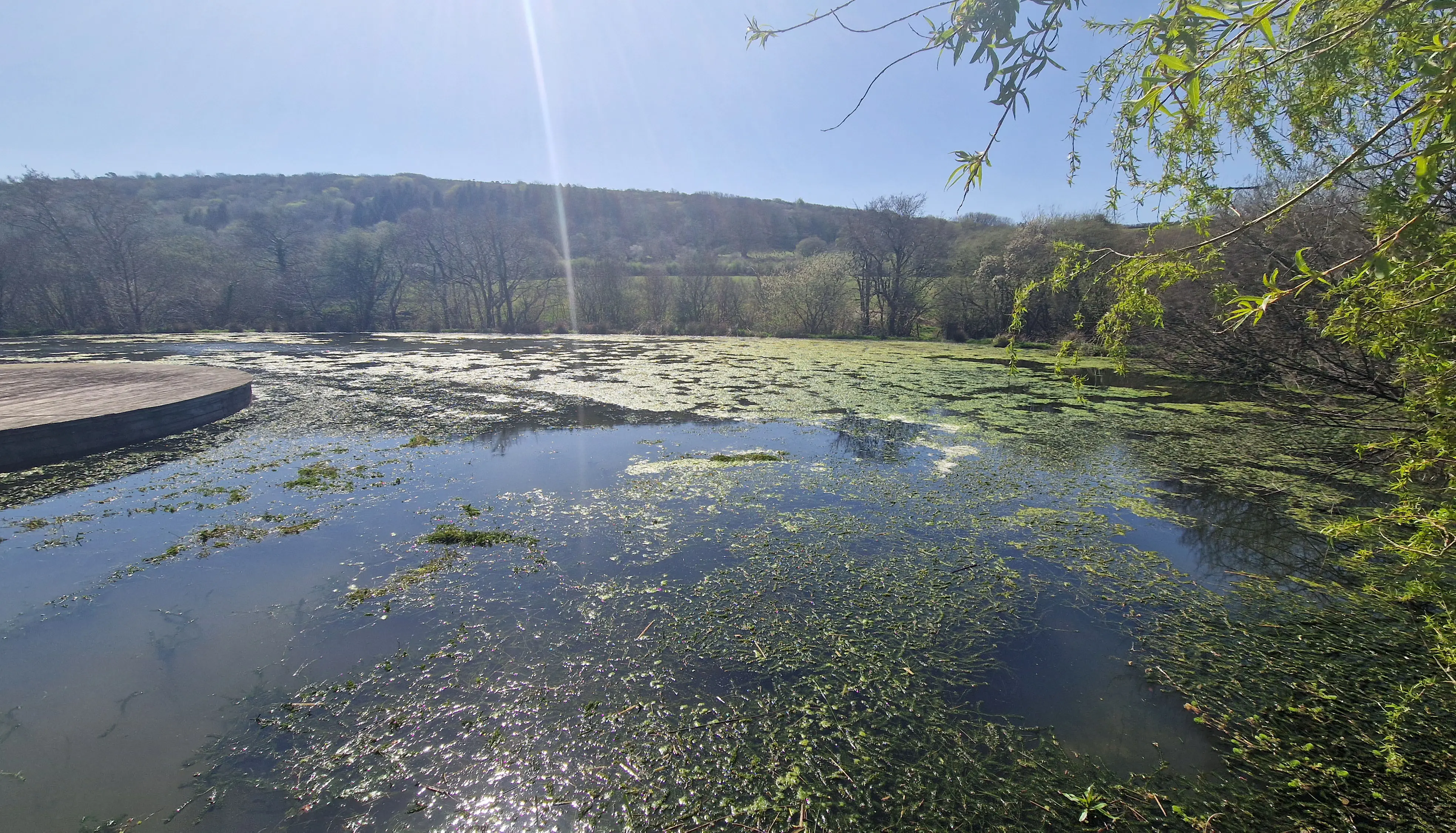
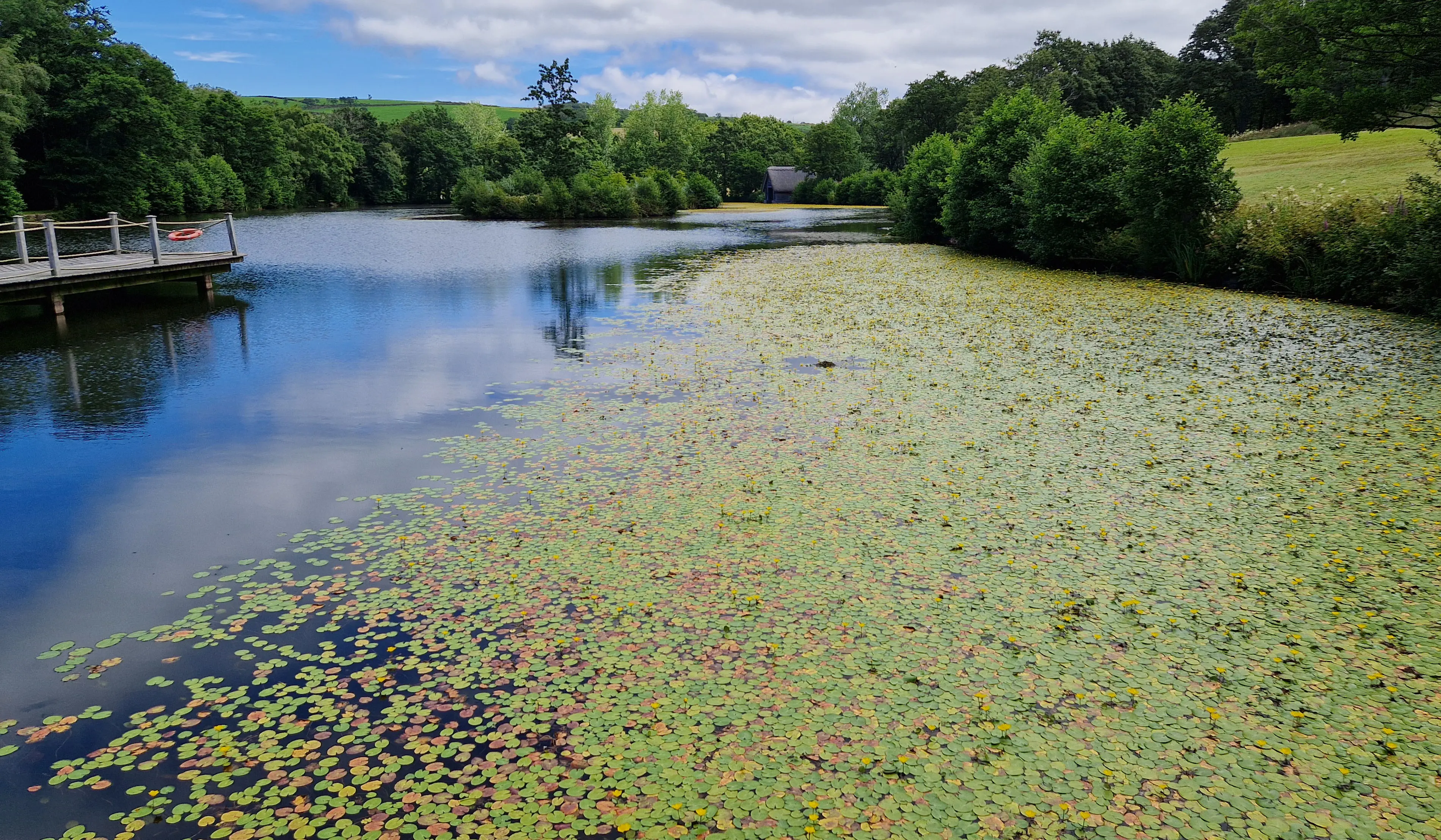
This public pond had become heavily affected by excessive algae growth, with dense accumulations covering large areas of the water surface. Situated within a popular public space and surrounded by well-used walking routes, the declining condition of the pond had become increasingly noticeable to visitors and local residents.
As the algae continued to accumulate, the once open waterbody became dominated by thick floating growth, significantly affecting its appearance. During warmer periods, decaying algae also produced an unpleasant odour around the surrounding paths and public areas. With the pond forming a prominent feature of the site, the local council began receiving regular complaints regarding both its appearance and smell.
The Importance of Managing Algae
Excessive algae growth can affect both the health of a waterbody and the wildlife it supports. In public ponds, the potential risks are greater because people and their pets are more likely to come into close contact with the water. Some blooms, particularly those involving cyanobacteria (blue-green algae), can produce toxins that may be harmful to people, dogs and other animals. Dense growth and subsequent decomposition can also reduce dissolved oxygen levels, placing fish and aquatic wildlife under additional stress. Heavy surface growth can also significantly detract from the appearance of a pond, particularly where the waterbody forms an important feature within a park or other well-used public space.
Raking and Clearance
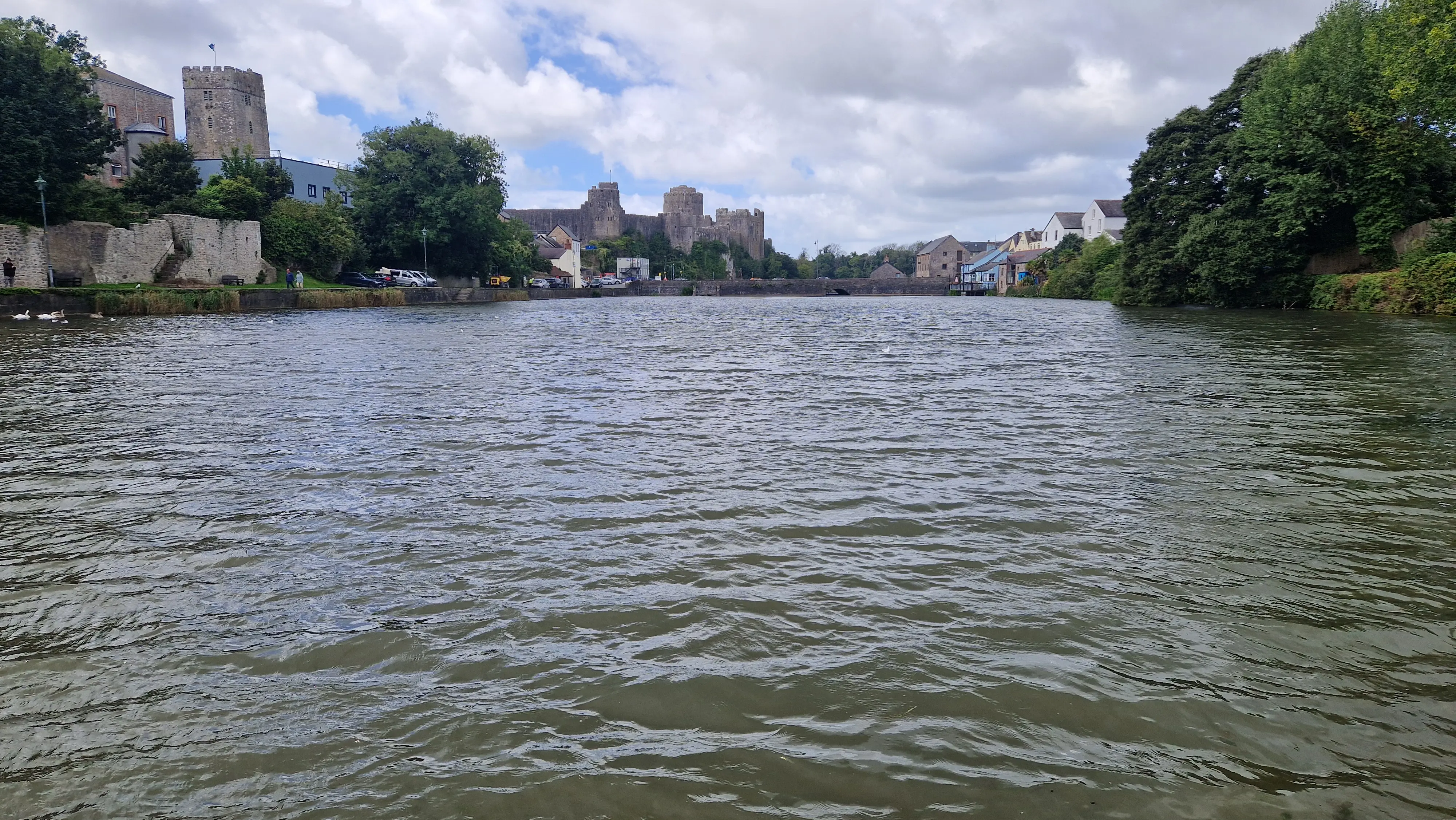
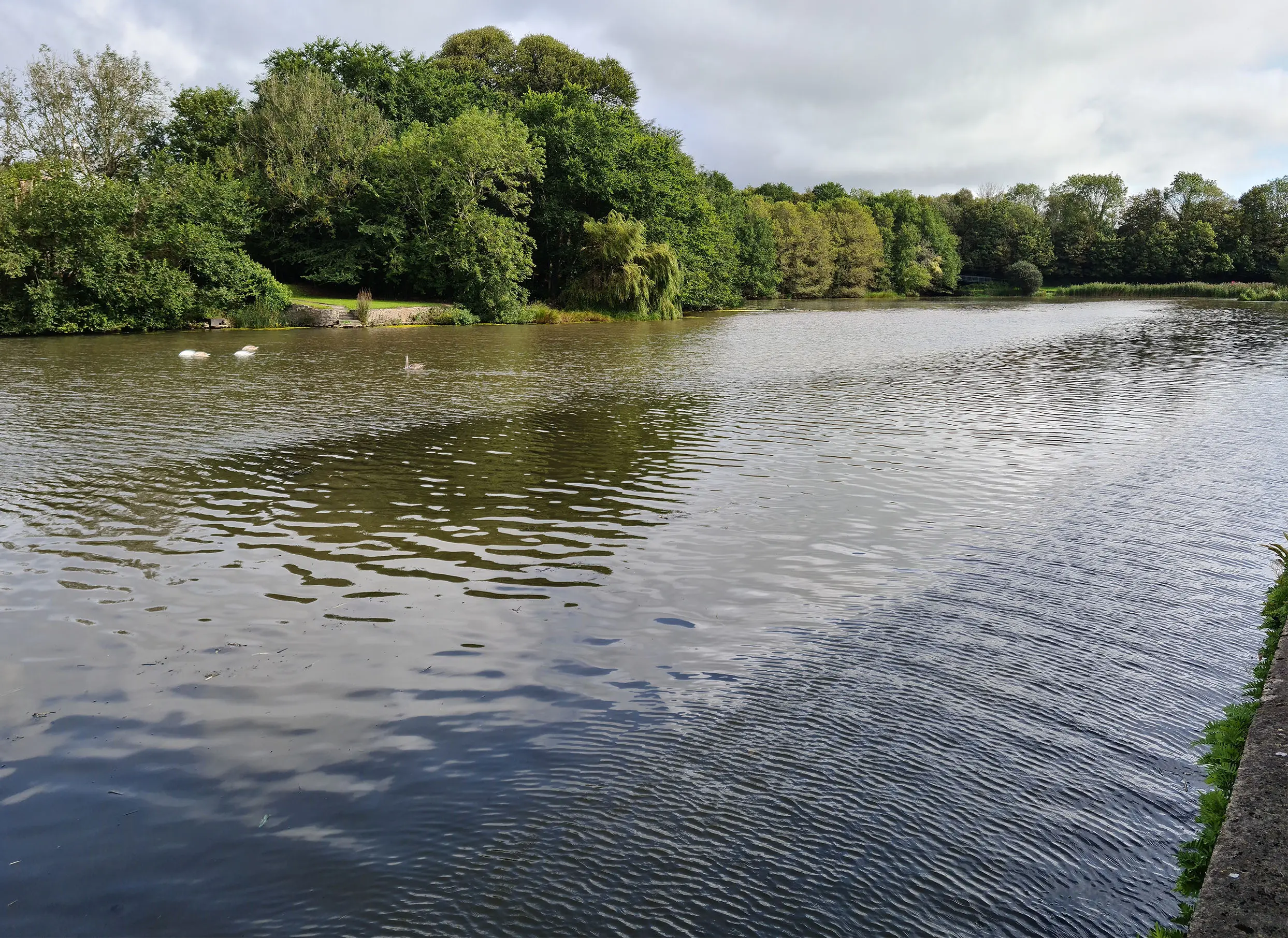
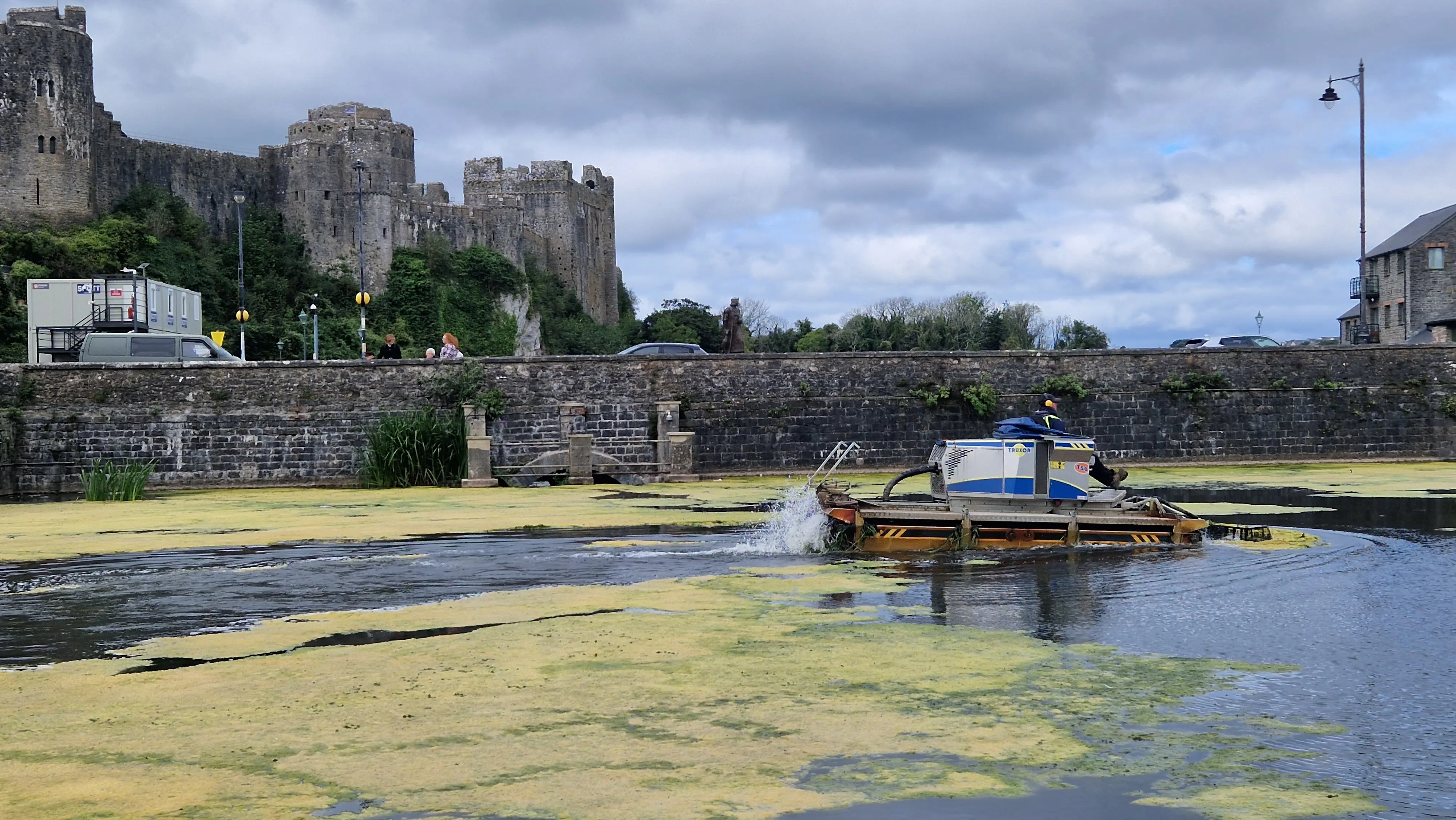
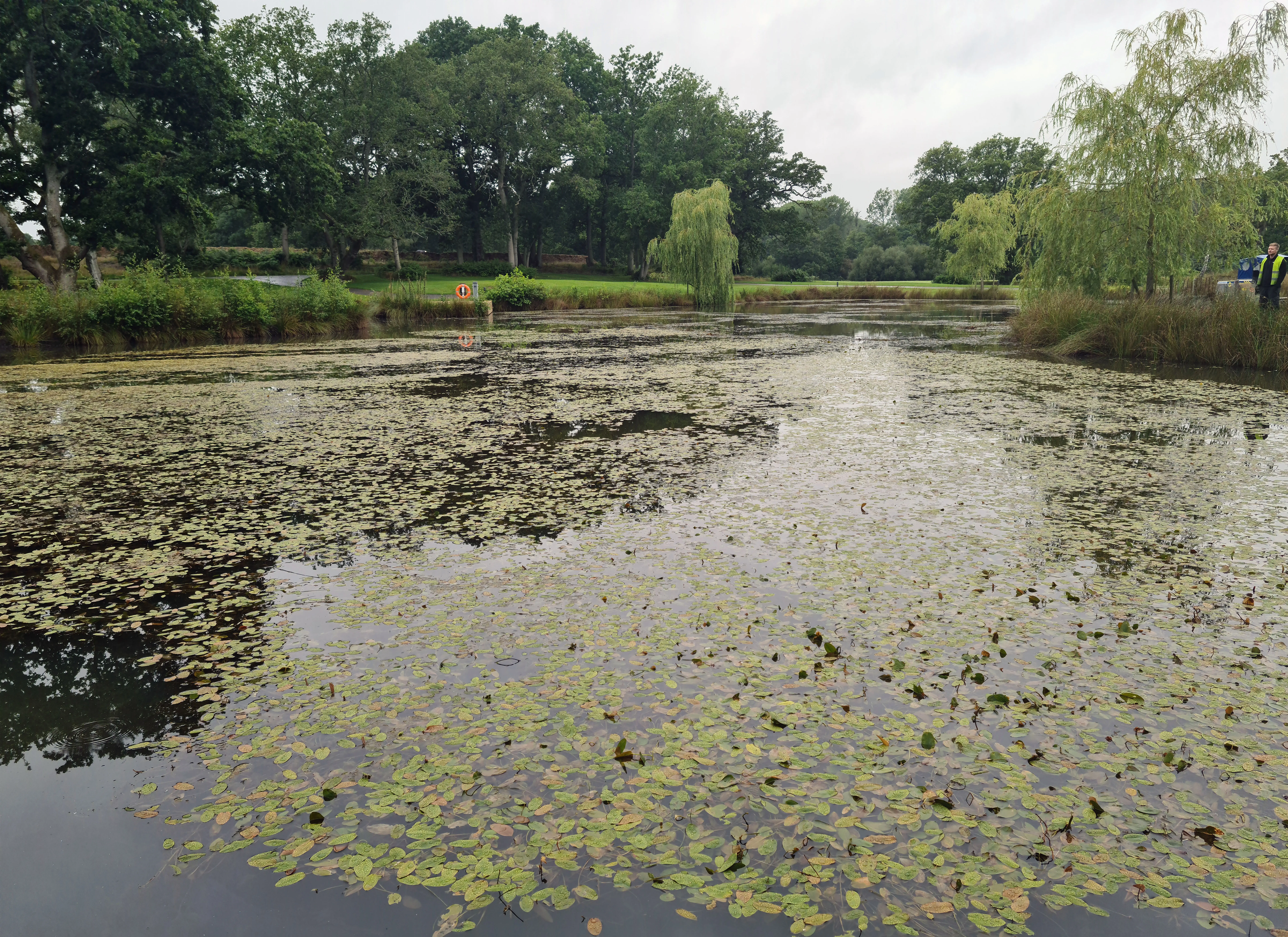
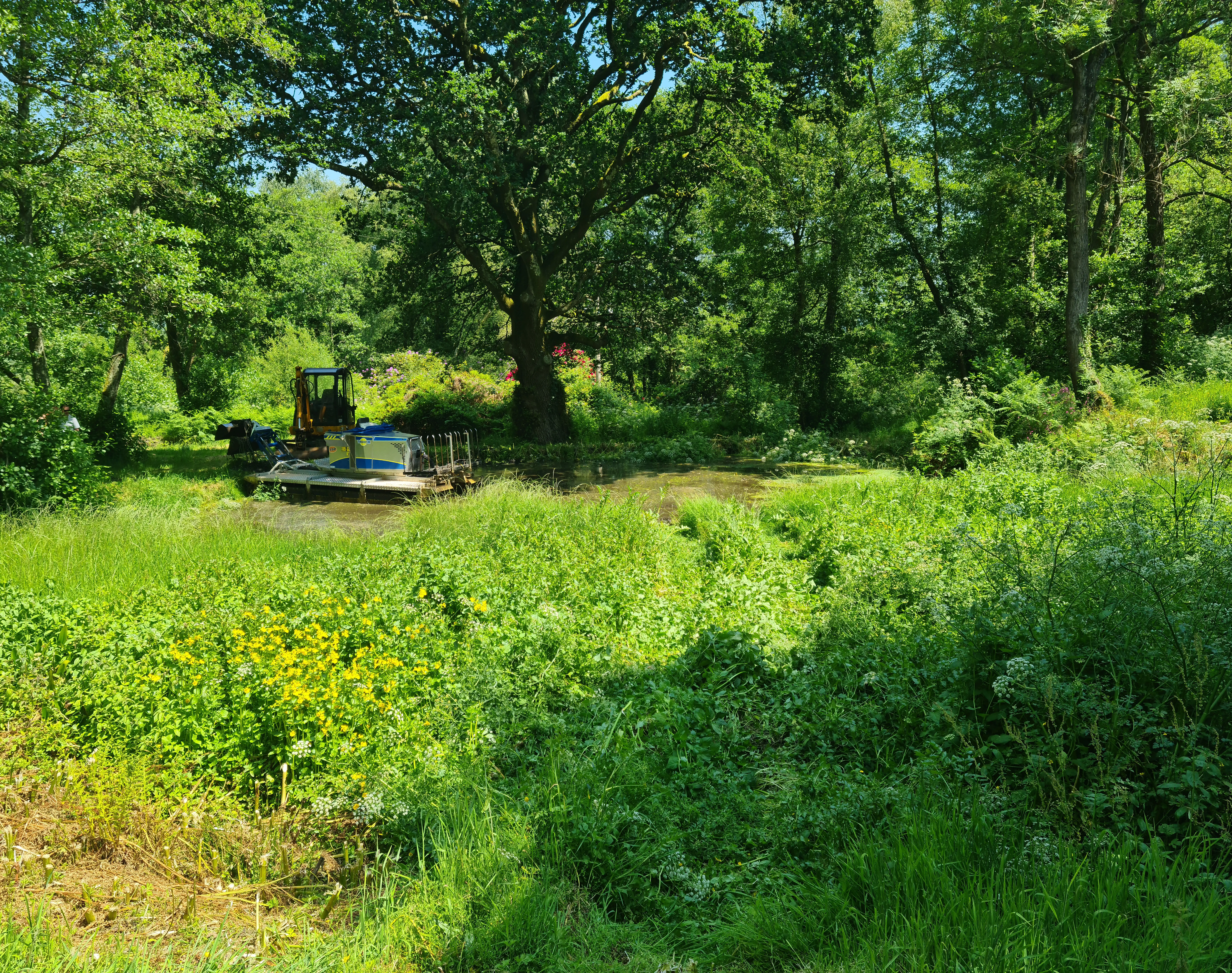
Aquaclear carried out targeted algae removal to clear the affected areas and restore the pond’s open-water character, significantly improving its appearance and overall condition. The collected algae was removed from the site rather than left to decompose within the waterbody, helping to prevent the nutrients held within the material from being released back into the water. This provides a quick and effective way of tackling heavy surface growth, delivering an immediate improvement to the waterbody while removing a significant volume of unwanted organic material.
Restoring Wildlife Habitat
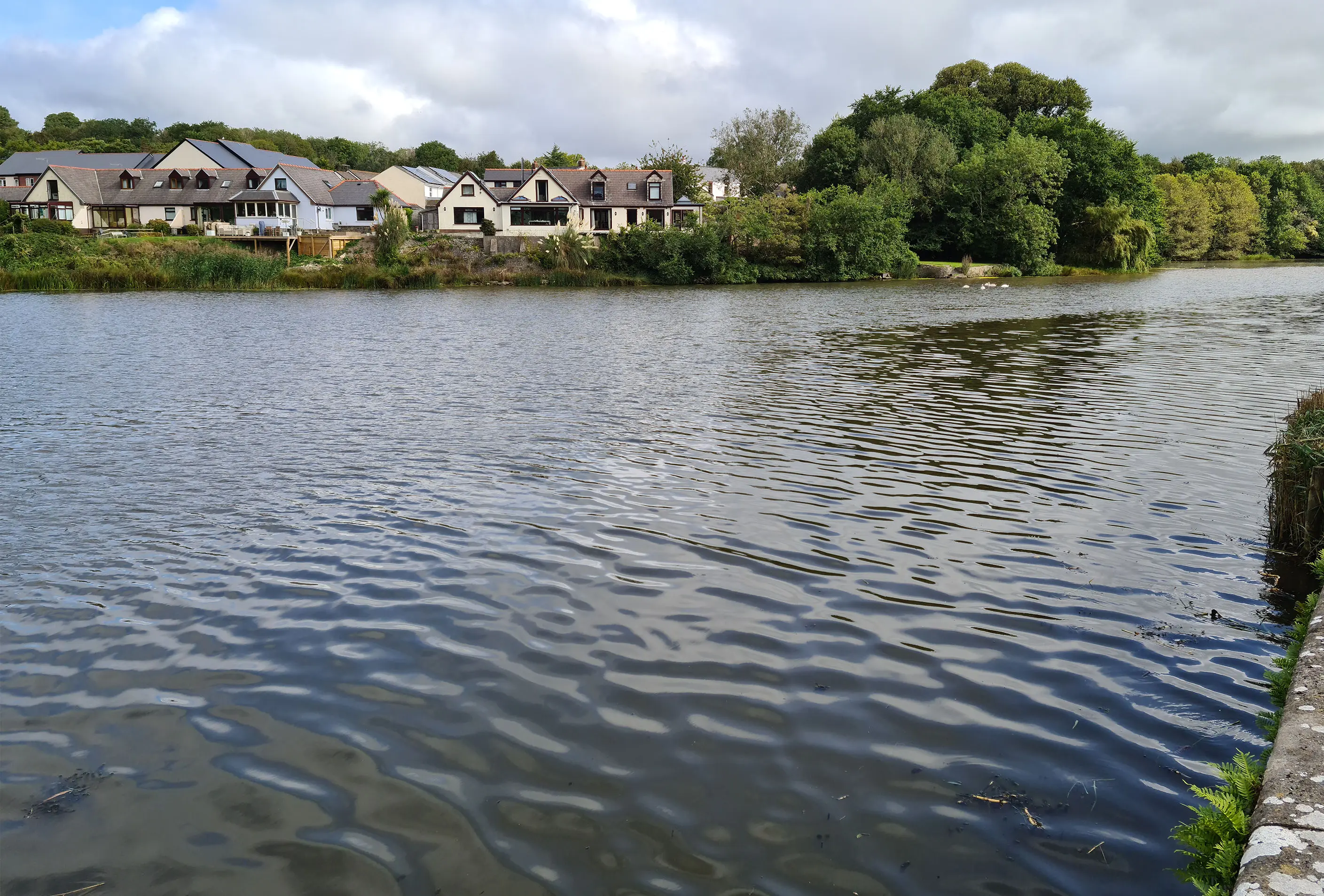
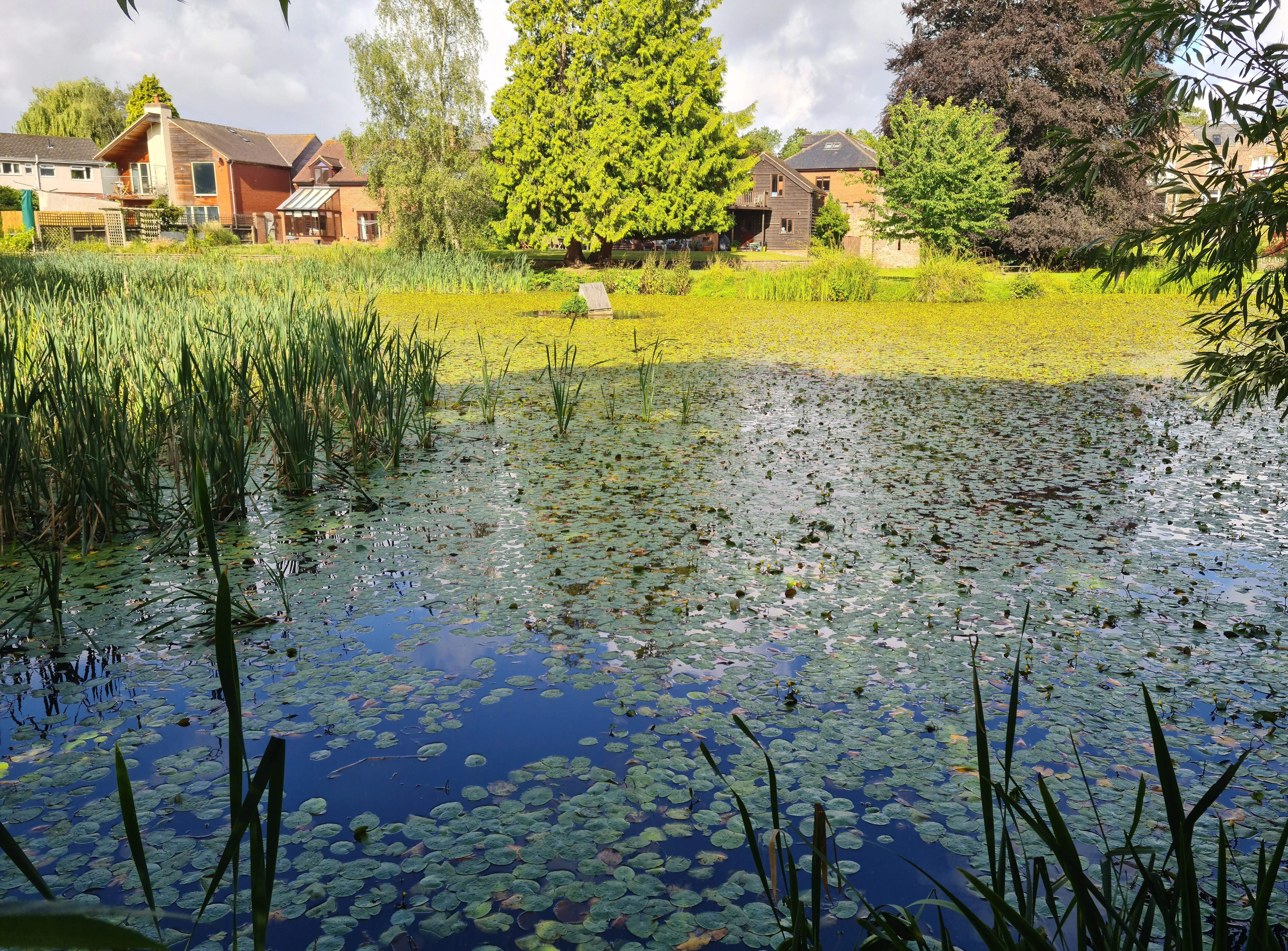
Alongside the algae removal, Aquaclear also carried out management of the established reed beds contained within gabion baskets around the waterbody. These areas provide valuable cover and habitat for birds and other wildlife but require periodic maintenance to prevent the reeds from becoming overly dense and spreading beyond their intended boundaries into areas of open water. Selective cutting and clearance helped control this encroachment while retaining the structure and ecological value of the reed beds, ensuring they continue to provide shelter, nesting and feeding opportunities for birdlife.
Why This Method?
In some situations, mechanical algae removal can provide a more practical and cost-effective solution than undertaking major works to address the underlying causes. Dredging a waterbody of this scale can carry a substantial price tag, while chemical treatment across such a large area can also be prohibitively expensive and may require repeated applications. Neither approach necessarily guarantees a long-term solution, particularly where the conditions driving algae growth originate beyond the waterbody itself.
As this pond forms the final waterbody in the system before water reaches the sea, nutrients and other factors contributing to algae growth may originate much further upstream. Addressing the underlying cause could therefore require significant works across the wider catchment, with major investment in the pond itself offering no guarantee that the algae would not return.
In these circumstances, regular mechanical clearance can provide a faster and considerably more economical approach to ongoing management. Rather than committing to costly large-scale interventions, algae can be removed as required to restore open water, improve the appearance of the site and remove accumulated organic material. The works can also be carefully timed around ecological constraints, including the bird nesting season, allowing the waterbody to be maintained effectively with relatively little disruption.
Related Projects
Similar Case Studies
Explore other projects where we have delivered similar waterway management work.
Need Similar Work?
Have a Similar Project?
If you're dealing with a similar waterway management problem, contact us to discuss your site and the most appropriate approach.