
Local Authority · UK · 4th November, 2025
Managing Bulrush Growth in Sustainable Drainage Ponds and Basins
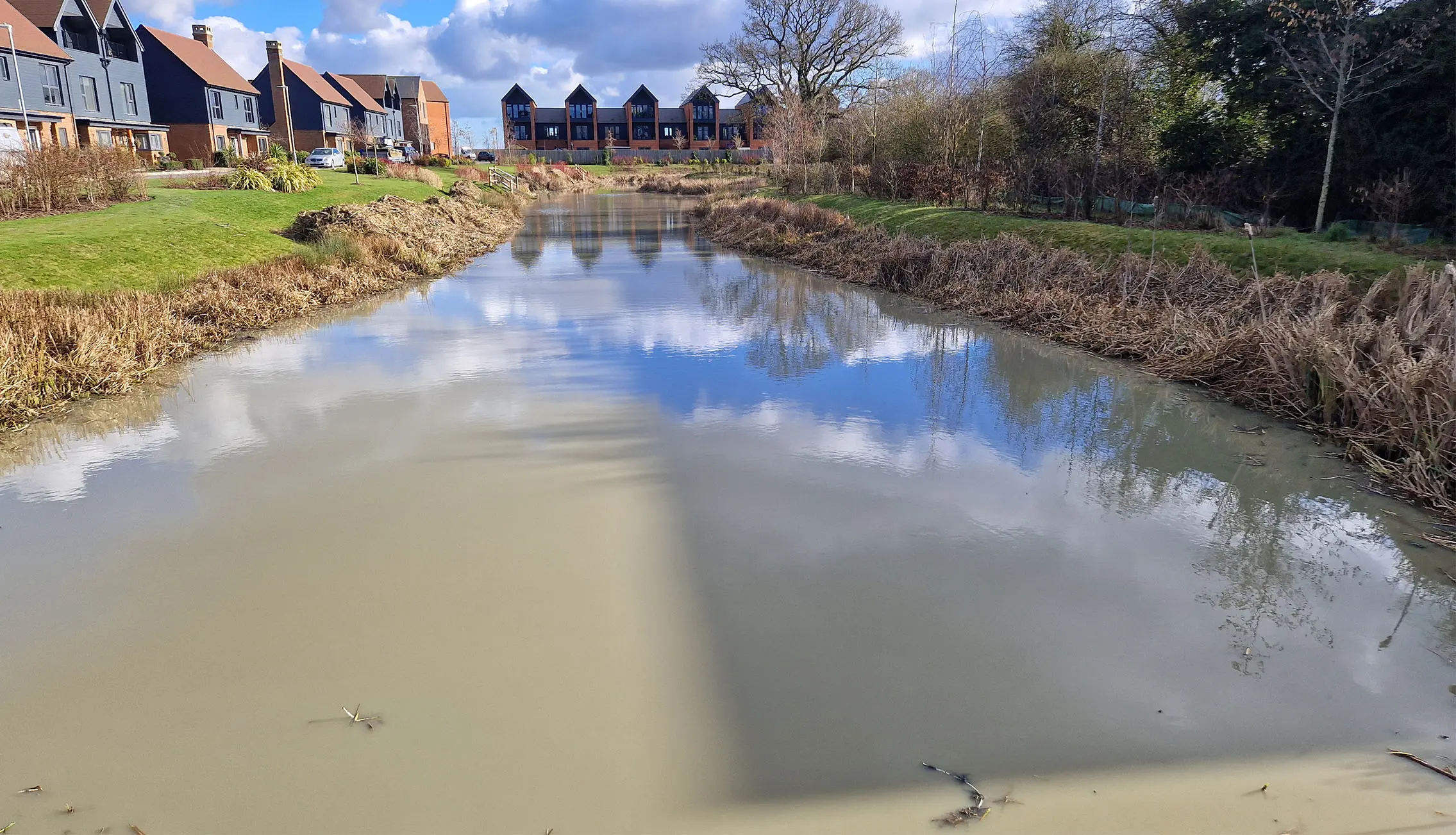
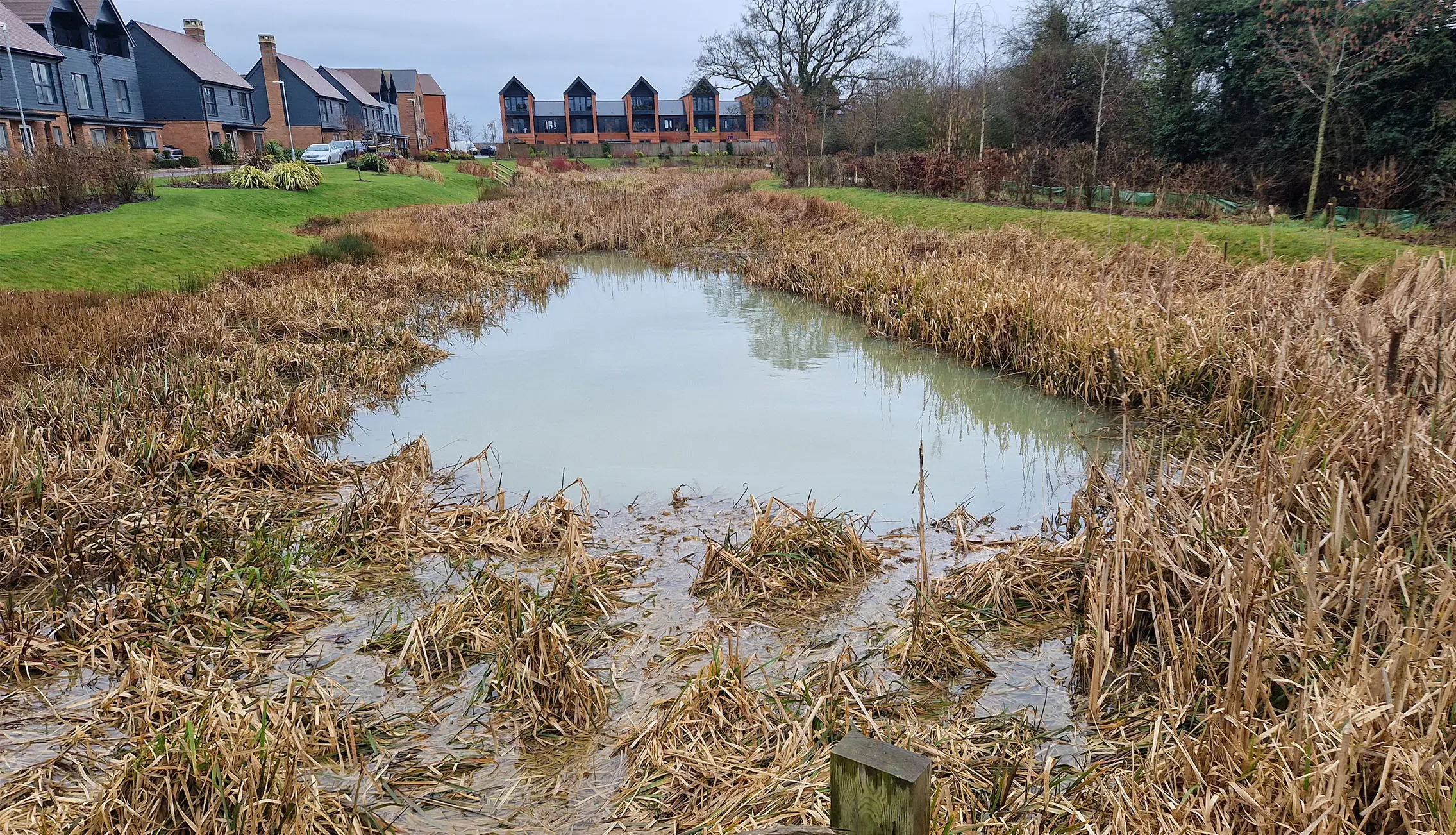
Bulrush clearance from SuDS ponds across the UK, restoring areas of open water and helping to maintain effective drainage throughout the system.
Managing SuDs Ponds
SuDS ponds form part of Sustainable Drainage Systems and are commonly used in urban and developed areas to collect, store and gradually release surface water. By managing runoff from roads, housing developments and other hard surfaces, they can help reduce pressure on conventional drainage networks and manage flood risk during periods of heavy rainfall. Over time, sediment and dense aquatic vegetation can accumulate, reducing areas of open water and potentially affecting storage capacity and water movement. Regular management helps ensure these ponds continue to perform their drainage function while retaining the valuable wetland habitat they can provide.
Each year, Aquaclear is commissioned to manage established bulrush and other aquatic vegetation across public attenuation ponds forming part of wider Sustainable Drainage Systems (SuDS).


Clearing Bulrush from SuDS
While these ponds perform an important drainage function, they are often prominent features within housing developments, parks and public spaces. Maintenance must therefore restore function while leaving a clean, attractive finish for residents and visitors.
The level of vegetation management varies according to each pond’s drainage and ecological requirements. Some sites need only selective clearance between the inlet and outlet, retaining established vegetation for habitat. Others require more extensive clearance to restore storage capacity while preserving suitable areas for wildlife. By tailoring the approach to each site, Aquaclear can balance effective drainage, habitat retention and the appearance of these important public spaces.
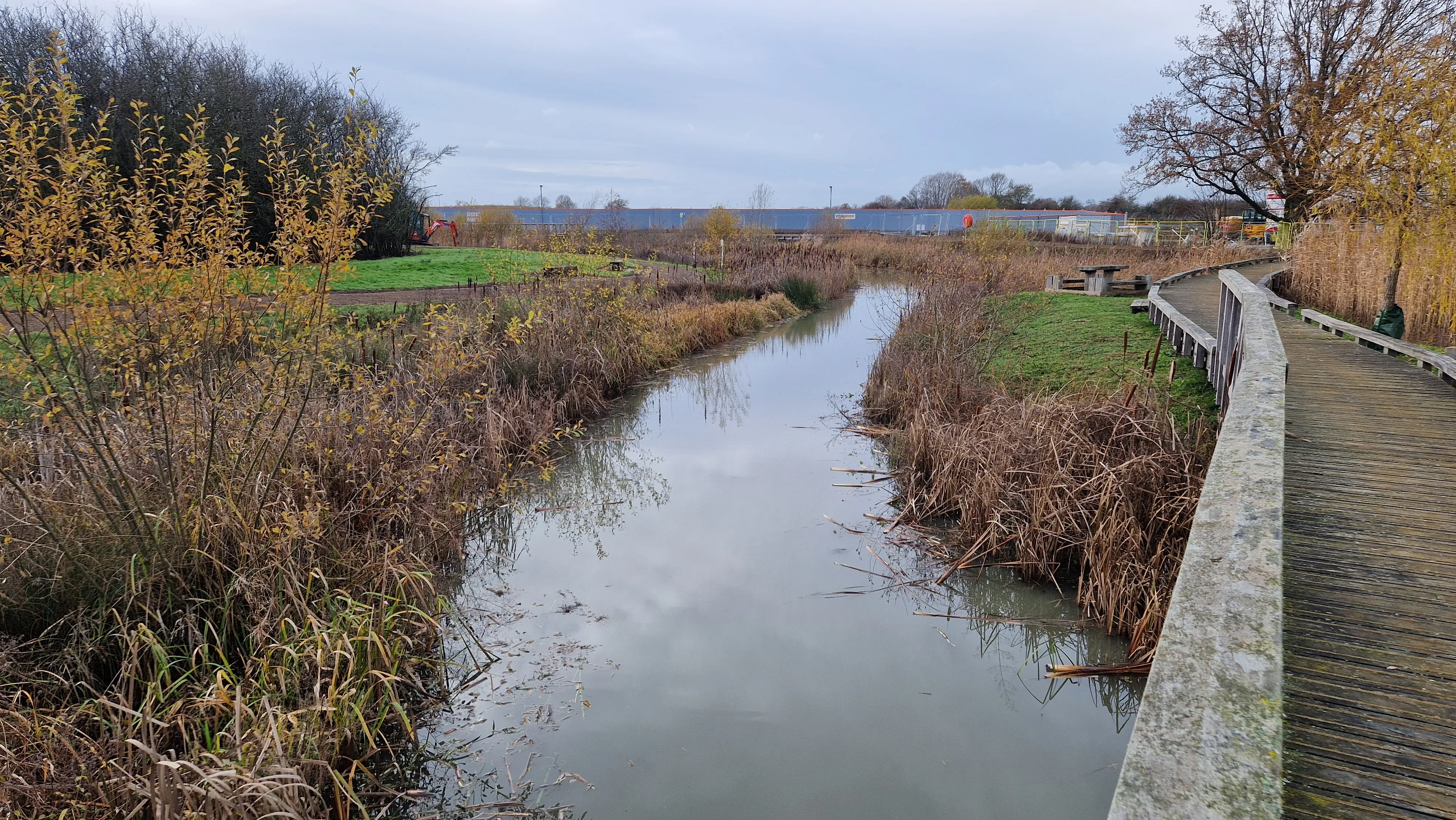
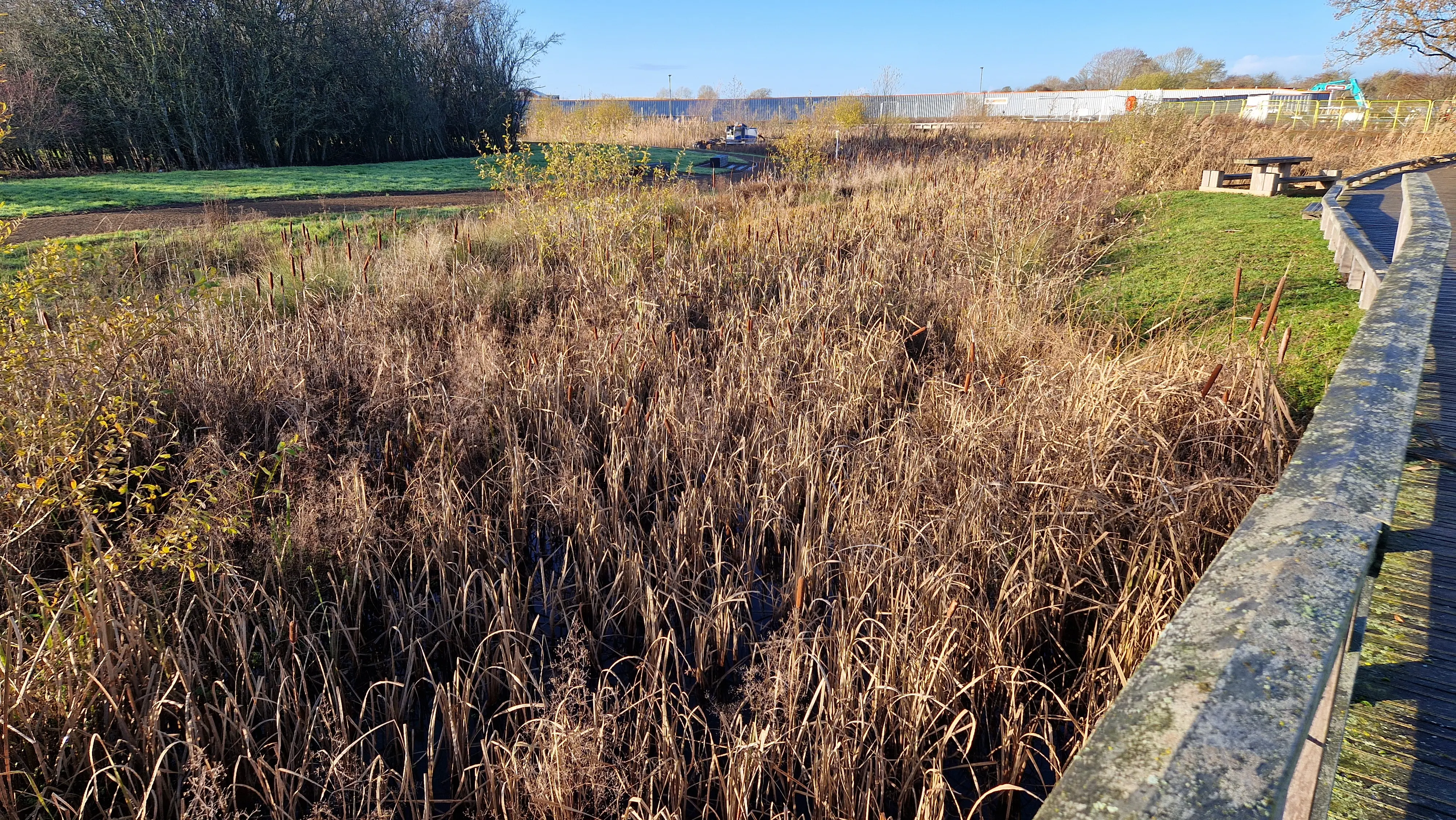
Restoring Open Water and Drainage Capacity
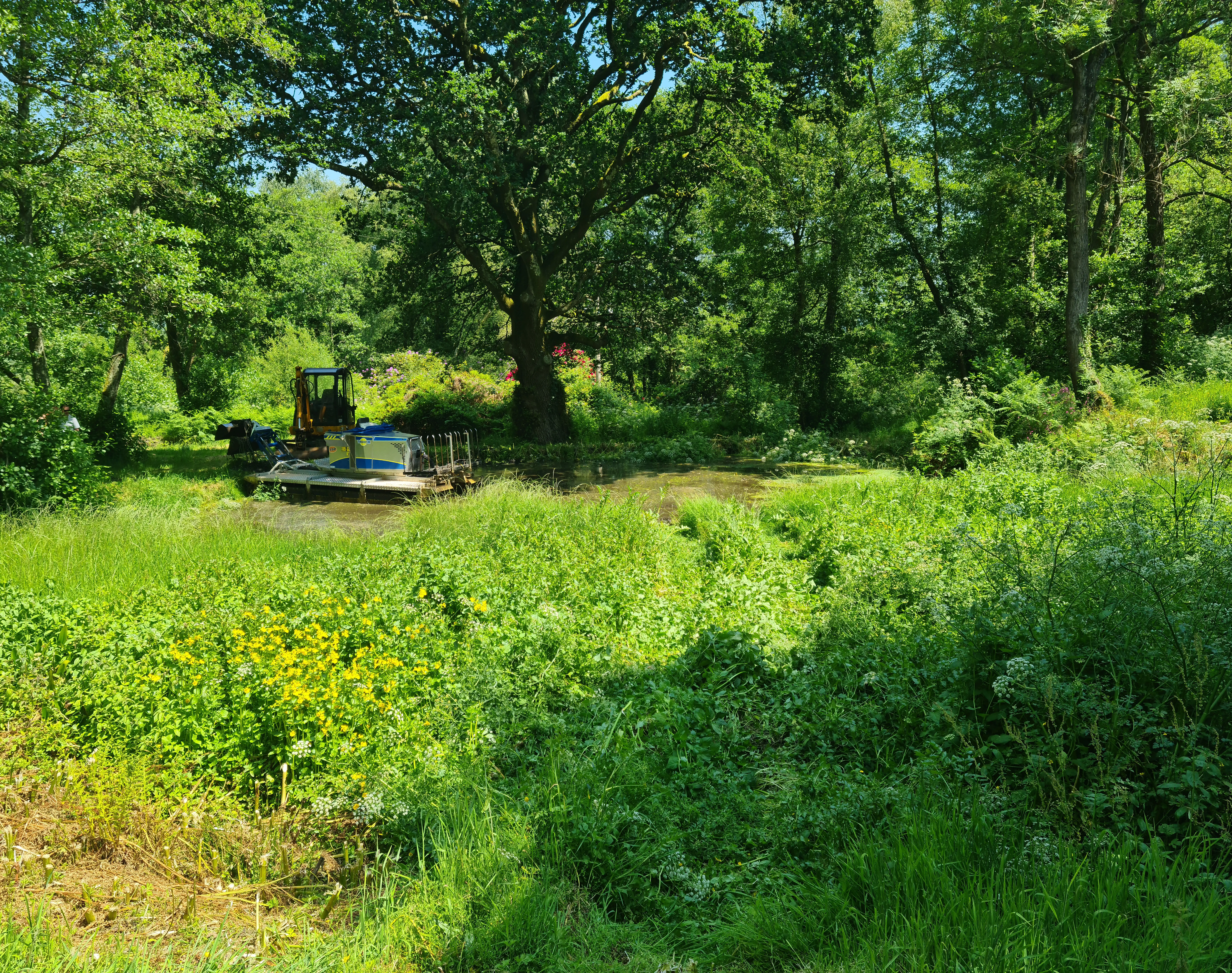
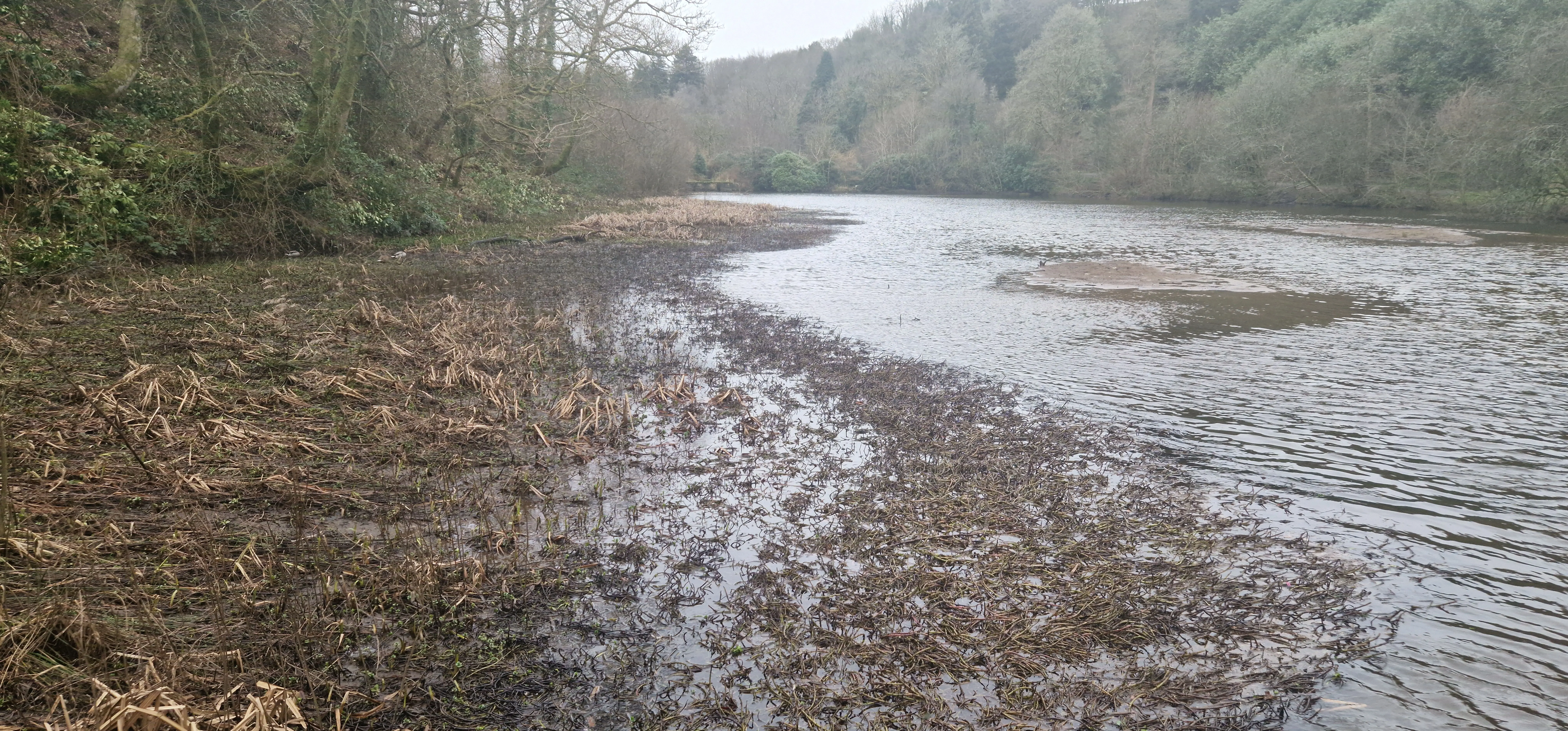
Using clamshell buckets, established bulrush can be removed together with its rhizome network, restoring areas of open water and creating greater capacity for surface water to move through and collect within the pond system.
The Truxor is particularly well suited to this type of work, where access for conventional machinery can often be limited. Its lightweight, amphibious design allows it to operate directly within the pond and across soft margins with minimal disturbance to surrounding banks and landscaped areas. With a range of attachments available, vegetation can be cut, collected and removed along with its rhizome, allowing clearance to be carefully targeted while retaining designated areas for habitat.
Related Projects
Similar Case Studies
Explore other projects where we have delivered similar waterway management work.
Need Similar Work?
Have a Similar Project?
If you're dealing with a similar waterway management problem, contact us to discuss your site and the most appropriate approach.